

Picking the Right Extractor For Your Kitchen Island
Selecting the ideal extractor for your kitchen island can make a real design declaration. Nevertheless, it's essential to consider your cooking needs in addition to the ventilation requirements of the area.
Extractor fans remove wetness, odours, heat and smoke, ventilating the space by pulling particulates into filters. Downdraft and ceiling extractor fans are ideal for island hobs, with both providing a minimalist look.
Induction downdraft hobs
An induction downdraft hob (likewise called a vented induction hob and downdraft cooktop) is a kitchen home appliance that perfectly mixes the benefits of induction cooking innovation with a built-in extractor fan. This flexible cooking option removes the requirement for a separate range hood in your kitchen, and its compact style makes it ideal for areas where a traditional hood won't fit. island vent hood draws steam and fat from the pans on your kitchen worktop, pulling them down a main or side tunnel before they travel through a plasma filter that eliminates bad smells and germs. This system is effective and stylish, and it will keep your kitchen free from lingering food odours while enhancing air quality.
A downdraft hob will pull back into the cabinet or space beneath your kitchen counter top when not in usage. This might restrict your storage capacity in the space below, and it may also require customized cabinetry services. Additionally, a downdraft can be installed to the wall behind your hob. This type of hood is ideal for cooking areas that don't have the space or spending plan for an island extractor, however it doesn't supply as much ventilation as an incorporated downdraft hob.
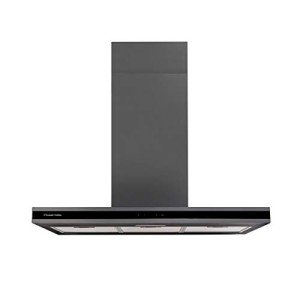
The selection of island extractors is more diverse than for standalone hobs. You can discover traditional chimney designs with stunning curved canopies, such as the EKPK90BL island canopy hood, or minimalist flat designs like the ECNK90SS flat glass island extractor. Some island extractors duct the drawn out air to an outdoors vent, while others recycle and recirculate the cleaned air back into your kitchen.
Unlike downdraft hobs, which use up area under your kitchen countertop when not in usage, these smooth hoods are set up beneath your sink, which saves important worktop space. They can be controlled with a simple, intuitive interface that provides easy access to essential functions and settings. A lot of downdraft hobs are simple to tidy, too-- merely clean the stainless steel extractor grid with a moist fabric.
Downdraft extractors
When you install a downdraft extractor under your hob, steam, grease and smells are drawn in horizontally directly from your pots and pans. This implies that they're much more reliable than an overhead cooker hood because they don't permit the fumes to increase up into your kitchen and expanded over surfaces like drapes and furniture.
When the system is not in use, a downdraft extractor conceals neatly underneath your work surface. This makes them ideal for kitchen areas that don't have space for a large, large extraction unit on the ceiling above. A downdraft extractor is likewise excellent for open plan kitchen designs since it does not obstruct sightlines, unlike an overhead extractor.
A downdraft extractor can be vented out of your home using ducting or, depending upon the kind of extraction fan, recirculated into your home through carbon filters to eliminate smells from the air in your cooking space. This choice is great for allergy patients and those who want to improve the general air quality in their kitchen.
The disadvantage of a downdraft extractor is that it does take up cabinet area beneath your cooktop, so you'll require to plot your kitchen thoroughly before picking this option. You'll need a cupboard or space beneath your hob that's huge enough for the extractor to slip down into when in usage, and it will need to be a similar size as your island to accommodate the motor and ducting.
Compared to standard island extractors, downdraft extractors are more sleek and modern. They often look developed into your hob or the countertop and can be controlled by hand with touch buttons, making them simple to use. Some even have actually LED job lighting developed in so that your work location is well-lit while you're cooking.
Another benefit of a downdraft extractor is its quiet operation. While it is effective, it runs at much lower decibel levels than basic extractor fans, making it a terrific choice for families or those who delight in the peace and quiet of a home cooking space. They're also incredibly flexible, and can be installed in numerous configurations to match your requirements.
Ducted extractors
As the name suggests, ducted extractor fans include ducting that extracts air straight beyond your home. They're a terrific choice if you're looking for something that entirely eliminates smoke, odours and wetness from your kitchen. They're likewise more powerful than recirculating extractor fans, and can be louder as an outcome.
Nevertheless, the extra power does mean that they can be more effective than recirculating systems. If you're not sure which option is best for you, speak to one of our team and we can encourage you further.
Additionally, if island ventilation hoods 're not wanting to invest the additional money on a ducted extractor fan, a recirculating system may be a better alternative for your kitchen. Recirculating systems work by removing grease and odours with charcoal filters, rather than extracting the air. They are much more budget friendly than a ducted system, and can be installed in areas where a vent is not possible.
While both ducted and recirculating extractors are ideal for island hobs, it is very important to ensure that the model you select can perform either work. Many designs are developed to be vented out or recirculated, however you must constantly examine before you buy, as this will affect where and how the cooker hood can be installed.
Along with offering an appealing appearance, there are several benefits to installing a kitchen extractor fan in your home. These include:
Enhanced lighting-- numerous extractor hoods have built-in lights that can be turned on or off when required. This implies you can prepare in the dark without depending on your main light, which can be particularly useful if you're cooking with children.
Included value-- a quality kitchen extractor fan can assist to add value to your property when it comes time to sell up. Possible purchasers will see it as a preferable function and be most likely to pay more for your residential or commercial property as a result.
Ducted extractor fans are the most efficient way of getting rid of wetness and odours from your kitchen, but they require expert setup. They can be noisy, particularly when used in combination with an open-vented gas stove, and need routine filter maintenance. If you don't wish to purchase a ducted extraction fan, recirculation models are a great option, and can be set up nearly anywhere.
Free-standing extractors
If you're after a streamlined, modern extractor search for a downdraft cooker hood that slots into your worktop and will pop out at the touch of a button. These designs are ideal for minimalist cooking areas and are particularly fit to a hob built into an island unit.
Whatever design of cooker or hob you have, ventilation will be required to get rid of steam, grease and cooking smells. So, whatever you decide, it's important to choose the right extractor for your home. This will depend on the design of your kitchen, whether you desire something structured or declaration and how much you're ready to invest.